Clients are pasting appointment letters into ChatGPT to find grounds for complaints
01
Story of the week

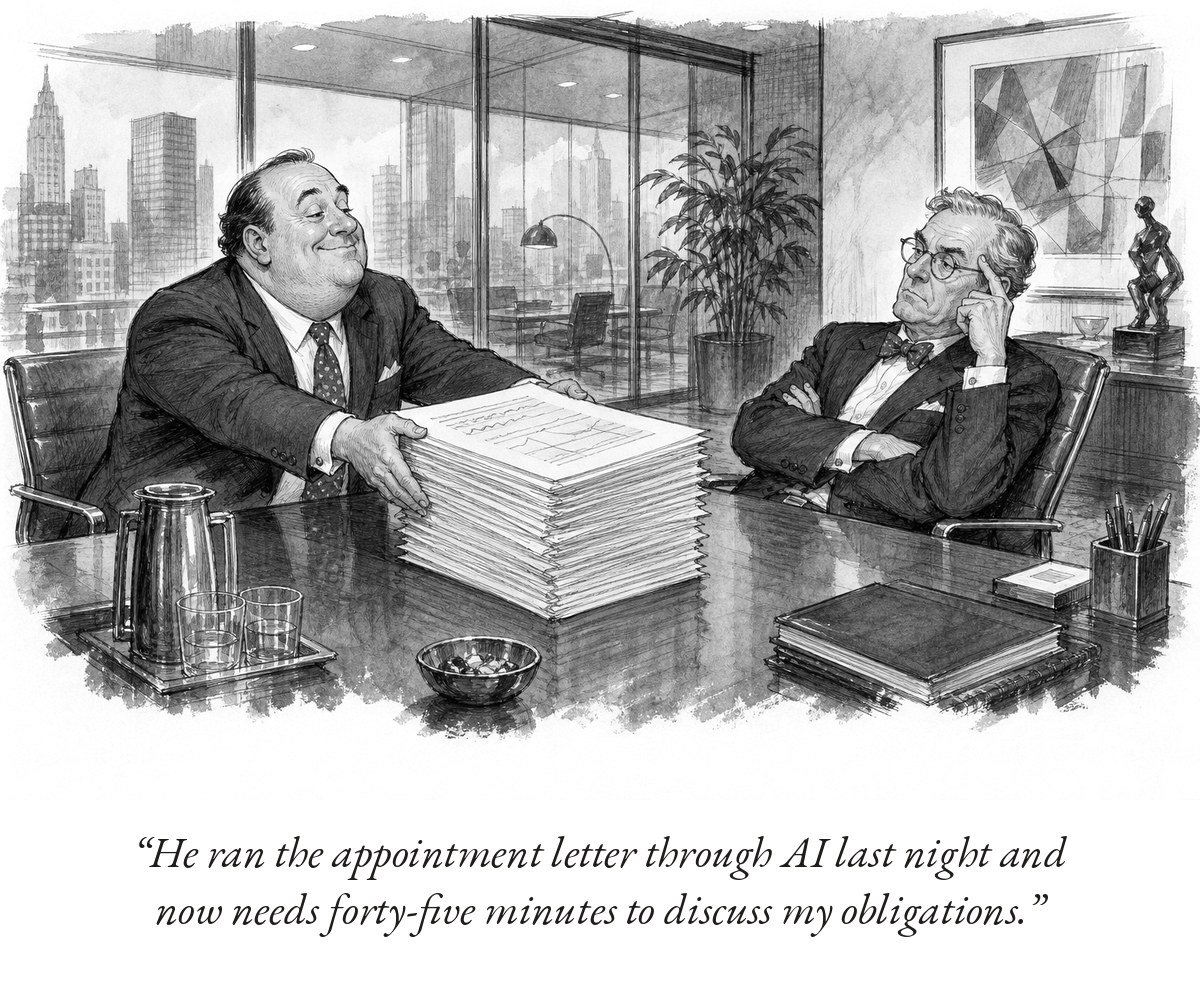
The ARB's single most common complaint category is appointment terms. A client can now paste any appointment letter into ChatGPT and ask where the gaps are, and many already are. Lord Briggs, a Supreme Court justice, said earlier this year that a 'tsunami' of AI-assisted complaints is building across regulated professions, with water companies, GPs, and solicitors all seeing more claims since ChatGPT launched. Architects are in the same exposure window. The obvious response, running your own historical documents through the same tools first, carries a complication. PI insurers typically require notification of anything that could lead to a claim, so finding a flaw in an old appointment letter may lift your premium even after you fix it. Some insurers are treating internal audits as evidence of good risk management, but that position is not yet standard across the market. There is currently no formal RIBA or ARB framework that would let practices audit historical work without that risk.
Cartoon of the week
02
Themes
Clients and major institutions are forming AI policies that reach architecture practices from outside
Adobe shipped Photoshop 2027 with AI editing features built in. The New York Times responded by telling its photographers not to install the update, citing changes to images the editor may not notice. If a major institutional client takes the same position on architectural deliverables and specifies which software version can touch images before handover, that requirement lands with the practice working on the project. Separately, clients are already using ChatGPT to review appointment letters for gaps before filing complaints with the ARB. The common thread is that practices are receiving AI-related requirements from outside, before most have written internal policies of their own.
AI reached core technical disciplines in architecture this week
Motif connected its AI design environment to BHoM, Buro Happold's collection of structural engineering methods, so that AI prompts in a design session can call real, tested calculations directly. SCI-Arc launched a postgraduate AI specialisation for architecture students, structured as a full year of dedicated technical study added after a professional degree. One embeds AI in live engineering workflows. The other trains a cohort to work at that intersection. SCI-Arc's programme is open to students finishing a professional architecture degree, completing in one additional year.
Practices are making their position on AI part of how they present themselves to clients
Bord Collective, a new Sheffield studio, opened with a public statement that they work without AI tools, calling it a more ethical approach to design. A year ago, most practices sceptical of AI kept that view internal. SCI-Arc moved in the other direction, launching a postgraduate pathway that lets architecture graduates add an AI specialisation in one additional year. Both treated their stance as a headline at launch, as part of how they pitched themselves publicly. Treating AI position as a market signal is becoming more common on both sides of the question.
03
Notable tools
-
 Tooling
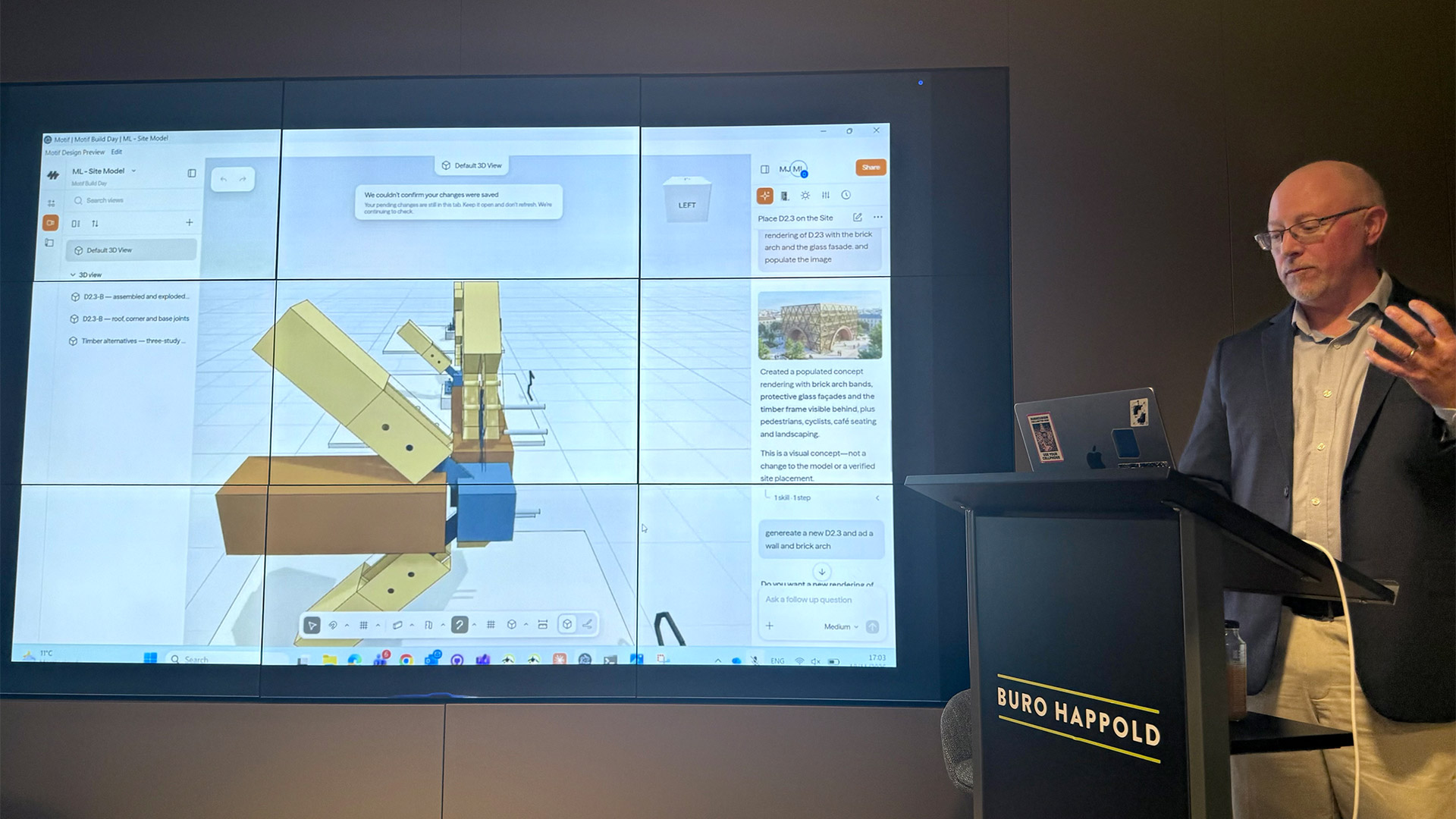
Motif: AI prompts connected to Buro Happold's structural engineering calculations
Structural engineering calculations from Buro Happold's BHoM collection run inside Motif when an AI agent identifies the relevant task. The engineering logic is tested and deterministic. Demonstrated publicly at a London event last week.
Only one tool qualified this week. The Motif integration is the clearest example of AI reaching real engineering calculations in a design environment, but it is not yet a commercially available product that practices can install and try independently.