Snaptrude Agent takes BIM from early massing to LoD 400 construction drawings
01
Story of the week
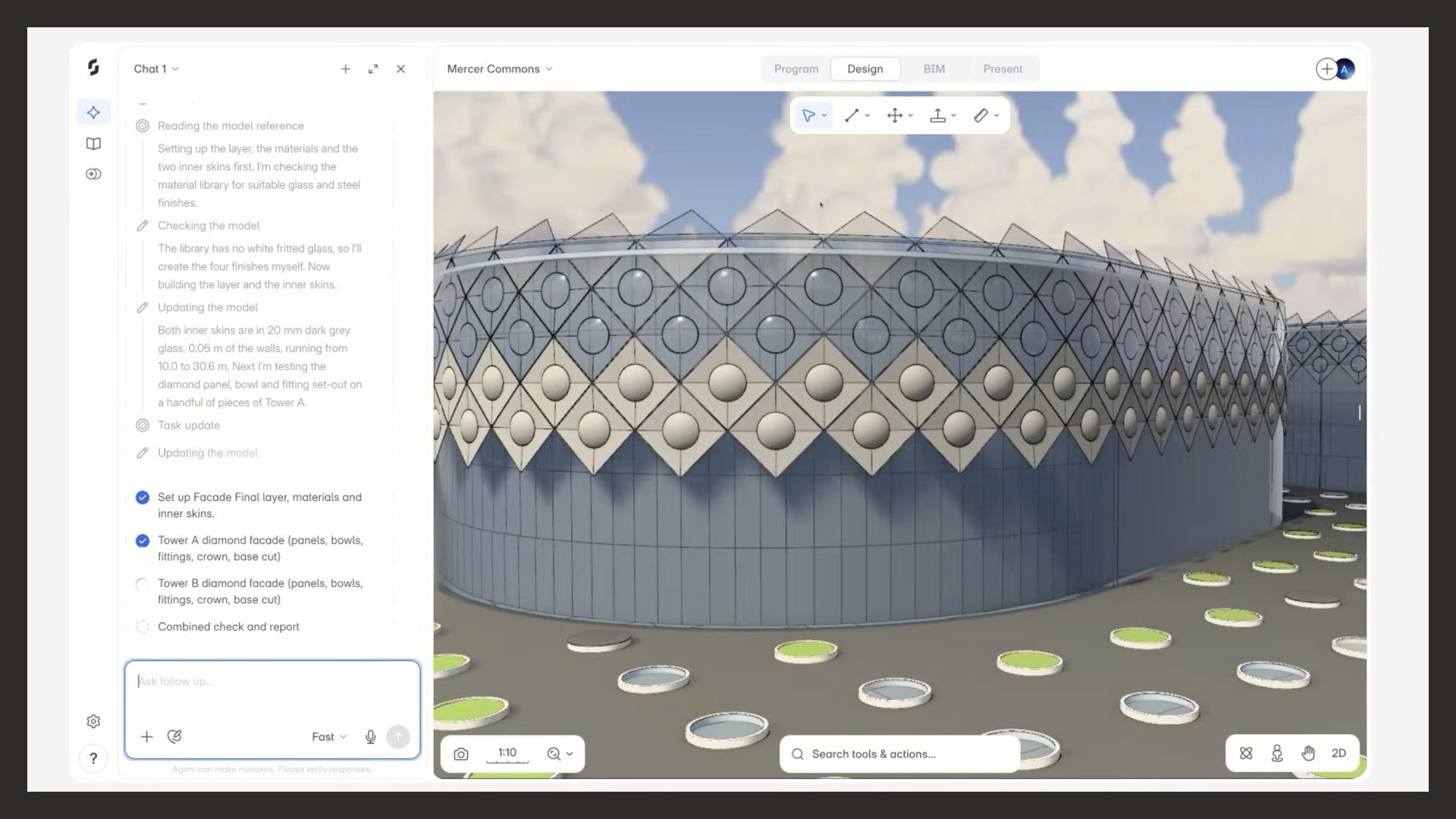
Snaptrude's Agent arrived last week able to carry a project from site analysis through structure, MEP, and full drawing sets at LoD 400. The user reviews a proposed plan at each stage and approves or redirects before the next step runs. Models transfer to Revit with existing families intact, and work already started in Revit, Rhino, or SketchUp can be handed off mid-project. That import process is the part worth testing carefully before committing production hours to it.
The same week, Autom8Labs released 22 free skill sets encoding how an experienced practitioner would approach specific Revit tasks — family creation, scan-to-BIM, model health, MEP, coordination, document control — step by step. Rather than leaving an AI agent to improvise a path through the software, the skills give it a known procedure to follow. Together, the two releases show something shifting: BIM production, not just concept design, is now the target, and the tool makers are starting to bake professional knowledge directly into the agent's process rather than leaving it to figure things out on the fly. Firms evaluating either tool should ask the same question: when the agent produces output that goes into a model others rely on, who reviews it and who signs off.
02
Themes
AI agents for BIM arrived this week carrying built-in professional knowledge
Snaptrude Agent and Autom8Labs skill sets both launched this week, and both are trying to solve the same problem from different angles. Snaptrude built the full workflow into a platform that takes a project from massing to construction drawings, with the agent handling each stage and the user holding approval at each gate. Autom8Labs took a component approach: 22 free skill sets that give an AI agent a practitioner's step-by-step method for specific Revit tasks, from scan-to-BIM to document control, rather than letting it improvise. What connects them is the encoding of professional knowledge into the agent's procedure. For firms, the practical question is whether that encoded knowledge matches how they actually work — their templates, their sign-off sequences, their families.
Accountability for AI tool outputs is becoming a question of law and firm operations at the same time
AMC Bridge's CEO described this week a situation he sees across large AEC firms: AI-generated tools sitting inside live project environments with write access to models, no documentation, and no named owner. His point was straightforward — the professional obligation when something fails has not changed, but the authorship of the tool that caused the failure has become genuinely unclear. The New York Times, Daily News, and Chicago Tribune filed suit against Brave browser the same week, alleging unauthorised scraping for AI training and paywall bypass. The two situations sit in different parts of the law. Both turn on who is accountable for what an AI system takes in or puts out. Firms that have staff-built tools running inside project environments, without a named owner and without documentation, are carrying a risk that is now getting harder to treat as theoretical.
AI gains ground fastest where the work follows a documented procedure
Google DeepMind's PlanAssist cut planning officer assessment time by 58% in pilots by handling the portions of an application review that follow a defined procedure. More than 70% of its reports went to officers without edits. nVibe, also released this week, works inside firms on the same principle: describe a workflow in plain language, receive a working tool, with RFIs, submittals, and CSI MasterFormat already understood. Both products operate where the task has consistent structure and documented rules. That is where the productivity numbers are clearest, and where the case for adoption is easiest to make internally.
03
Notable tools
-
Tooling
Snaptrude Agent — BIM production from massing to LoD 400 construction drawings
Works inside Snaptrude's platform. Covers site analysis, structure, MEP, and drawing sets. User approves each stage before the next begins. Transfers to Revit with existing families. Can pick up work already started in Revit, Rhino, or SketchUp — test that import process before committing to it. -
 Tooling
Autom8Labs — 22 free skill sets for AI agents working in Revit and Grasshopper
Each skill encodes a practitioner's step-by-step method for a specific task: family creation, scan-to-BIM, model health, MEP, coordination, document control, Grasshopper parametrics, and 3ds Max render setup. All 22 are free. Custom versions built against a firm's own templates are available on request. -
 Tooling
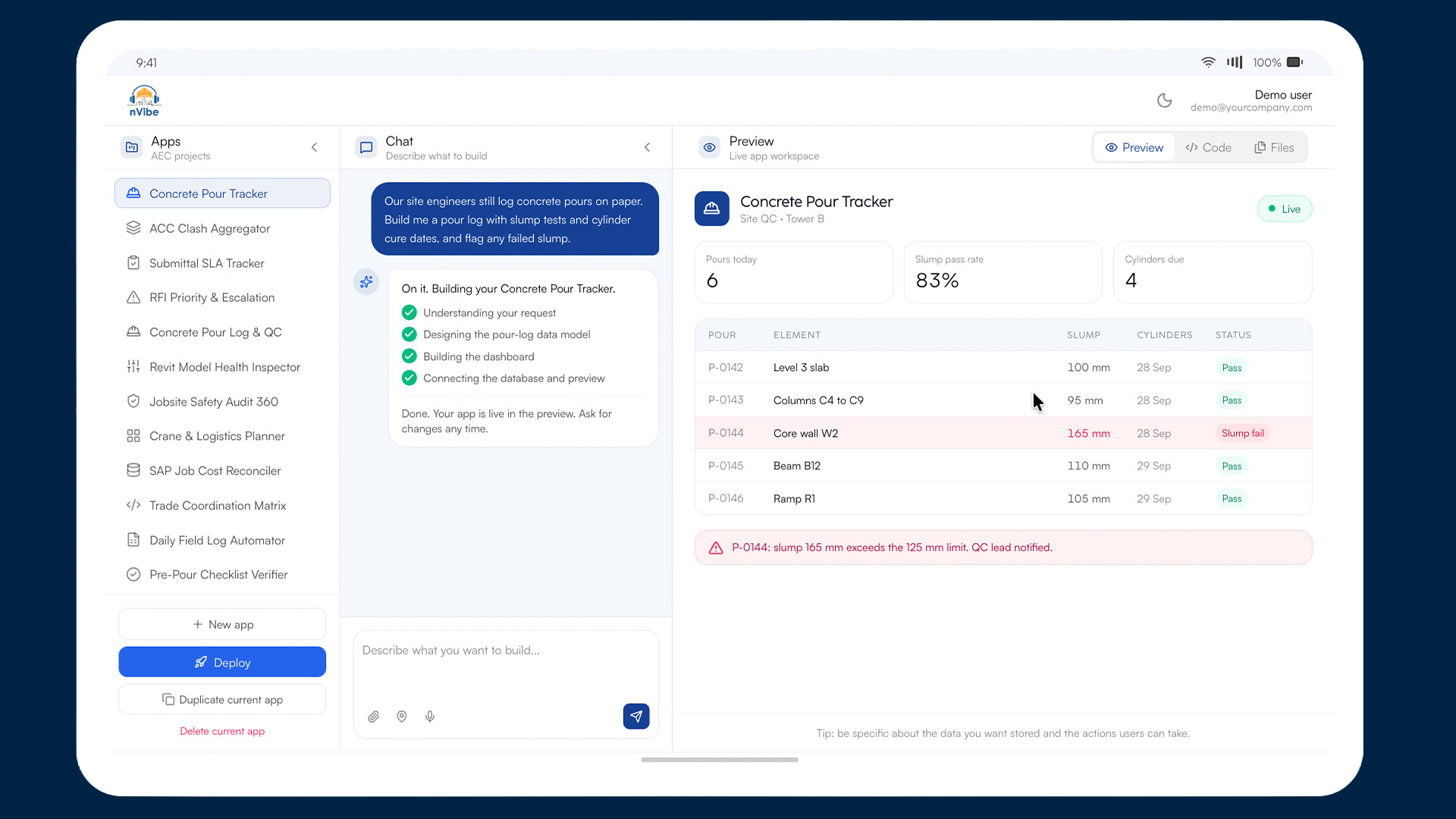
nVibe — plain-language descriptions become working AEC tools
Describe a workflow in plain language; nVibe builds a working application from it. Understands RFIs, submittals, and CSI MasterFormat. A Revit version placing the tool on the ribbon is coming. Aimed at VDC leads building clash-tracking dashboards and commissioning checklists. -
Practice
PlanAssist — Google DeepMind's planning AI expands to 15 English councils
Cut planning officer assessment time by 58% in pilots across Barnet, Camden, and Dorset. Over 70% of generated reports went to officers without edits. Twelve more councils join over the next 12 months. Worth watching for UK-based firms: faster officer assessment changes the rhythm of pre-application conversations.

Two daily issues this week rather than five. The tooling stories were substantive enough to carry a full weekly edition, but the governance and liability themes deserved more corroboration than a thin week allowed. The AMC Bridge story in particular warrants a follow-up when more firms are speaking openly about how they are managing staff-built tools.